
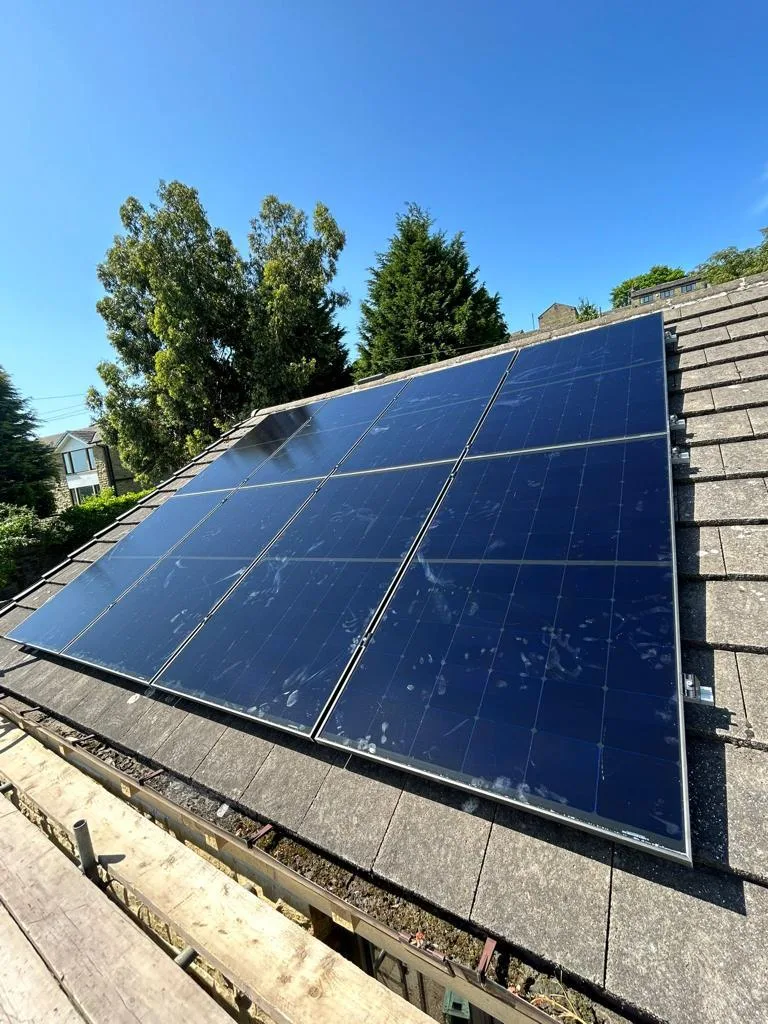
The first step in getting the right solar system is a robust property specific solar design that matches the site, roof and occupants' needs. This article explains the practical stages REST UK follows for homes, businesses and public sites across the UK, and what customers should expect at each stage. The aim is to demystify the technical checks, planning considerations and how storage or export payments fit into the final design.
Plain terms are used here before industry abbreviations. Kilowatt peak, written as kWp, describes the maximum electrical output of a solar array. The Smart Export Guarantee, or SEG, is the Ofgem scheme that pays small generators for electricity exported to the grid. The overview below shows why a bespoke design matters for performance, safety and long-term value. (energysavingtrust.org.uk)
1. Site survey and structural assessment
A site survey is the foundation of any property specific solar design. An assessor visits to measure roof orientation, roof angle, available area and shading from trees or neighbouring buildings, and also inspects roof condition and access for installers. Where roofs are old or need repair, renewing roof coverings may be recommended before panels are fixed.
Surveyors use manufacturer installation standards and Microgeneration Certification Scheme guidance to make sure the roof can carry the load and that the mounting system matches the roof type. MCS requirements set out how products and workmanship should meet safety and performance thresholds. (energysavingtrust.org.uk)
2. Sizing the system to your demand
Designers size the array to how you use electricity, the physical roof area and planning constraints. For homes this begins with reviewing past electricity use and discussing future changes such as electric vehicle chargers, heat pumps or planned extensions. For businesses the process includes demand profiles across the working day and seasonal variations.
Most installers will model likely generation in kilowatt hours per year and estimate what proportion you will self-consume versus export. Adding a battery changes that model, because storage increases self-consumption and helps shift generation to times of peak use. Energy Saving Trust tools and calculators are commonly used to check system suitability and likely outputs. (energysavingtrust.org.uk)
3. Component selection and layout
A property specific solar design includes panel layout, inverter choice and cable routing. Layout considers shading, roof penetrations and fire safety clearances. Inverters convert the panels' direct current to household alternating current and come in string or micro-inverter forms; the choice depends on roof geometry and shading patterns.
Where batteries are specified, the design identifies size and position, and makes space for any necessary inverter or battery interface. The system design will also show proposed meter changes and any generation export meter needed for SEG payments. (mcscertified.com)
4. Permissions, planning and network connection
Most domestic solar installations in England and Wales do not need planning permission, but exceptions include listed buildings or conservation areas, and rules differ slightly elsewhere in the UK. Installers advise customers to check with the local planning authority when a site is in doubt. For grid connection, installers liaise with the local distribution network operator to register the generation and, where required, obtain formal permission for export or larger systems.
Designs must account for local connection requirements and any limits the network operator places on export. If you want to receive SEG payments, you will need a registered SEG contract with a participating licence holder and often an export meter. Ofgem maintains the list of SEG licensees and publishes guidance for generators. (ofgem.gov.uk)
5. Costing, savings and performance guarantees
A detailed design produces a final quote showing system size in kWp, major components, estimated annual generation and an assessment of likely self-consumption. Installers should explain the assumptions behind estimated savings, particularly the electricity price used and the assumed self-consumption rate.
Ask for clear handover documentation that shows commissioning readings and warranty details for panels, inverters, batteries and workmanship. That paperwork is essential if you later sell the property or transfer any SEG contract. Energy Saving Trust and MCS guidance set out typical performance expectations and the documentation customers should receive. (energysavingtrust.org.uk)
6. Commissioning, handover and aftercare
On completion the installer tests generation, verifies export metering and hands over operating instructions. Good aftercare covers monitoring, maintenance checks and a clear route to report faults. For systems with batteries this includes guidance on charge settings and routine checks.
Long-term performance depends on correct commissioning and proactive maintenance. This article describes general design practice rather than a specific guarantee from any one installer, so ask your installer directly what monitoring, servicing intervals and fault reporting they include.
How REST UK ties the design to your project
REST UK is MCS certified and HIES protected, rated 4.3/5 ("Great") on Trustpilot from more than 721 reviews. When preparing a property specific solar design, the survey, modelling and compliance checks described above are used to produce a bespoke plan for that site, and the final proposal explains the impact of adding home battery storage, export options under the SEG and any required planning or network steps. For commercial or public-sector projects the same steps apply but with a stronger focus on load matching and payback periods. Learn more about our commercial and industrial services, or see our maintenance and aftercare and residential solar pages.
Further reading and official guidance: Energy Saving Trust on solar installation and sizing, Ofgem on the Smart Export Guarantee, and MCS installer requirements for design and installation. These sources set UK practice for safe, compliant and effective solar designs. (energysavingtrust.org.uk)