
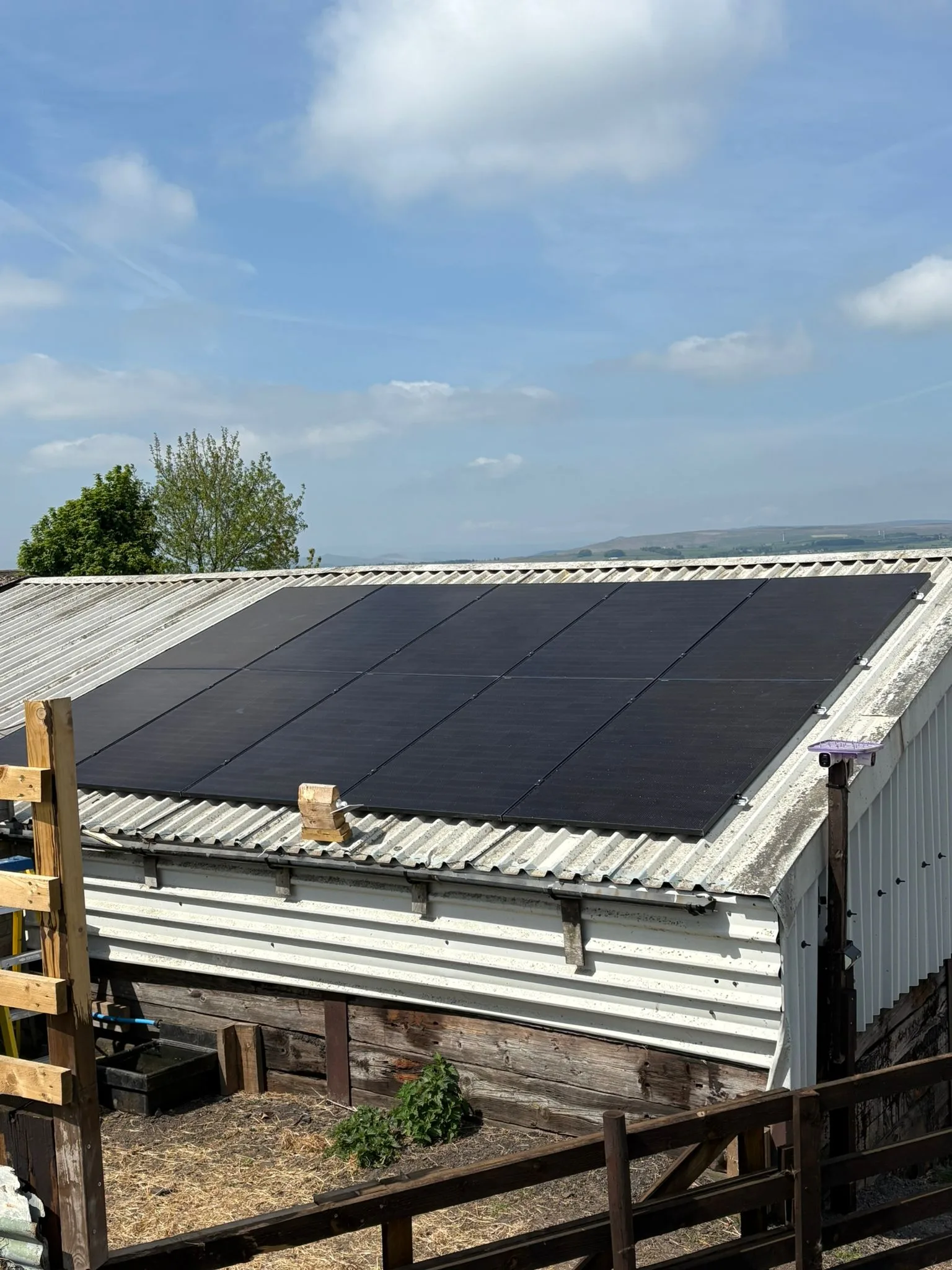
Commercial solar UK projects share the same core technology as a home installation but rarely behave like a bigger version of one. This guide sets out the practical differences you should expect, how scale, grid connection, permissions, billing and finance change the project, and how each step is managed so you end up with a system that fits your operations.
Why commercial solar UK is not just a bigger domestic system
The technology is the same: photovoltaic panels, inverters and optional batteries. But commercial projects differ in five recurring ways: size and layout, electrical connection and export rules, roof and planning considerations, operational contracts, and finance. Each of these is treated as its own workstream during design and consenting, so nothing gets missed.
1. Scale and system design
Commercial roofs are usually larger and flatter than homes, so arrays are designed for higher capacity and more complex layouts. String design, inverter sizing and structural checks all become bigger considerations at this scale. Large arrays may be arranged across multiple roof zones, requiring careful cable routing and selective module orientation to reduce mismatch and maximise yield.
2. Grid connection and export limits
Business sites often face different grid requirements from homes. Domestic microgenerators typically fall under engineering recommendation G98, which sets a 3.68 kW per phase threshold for a straightforward connection in many cases. Larger commercial installations can require a G99 application or a bespoke distribution network submission, and DNO or IDNO assessments may impose export limits or reinforcement works. We handle the application process and technical submissions so the connection offer reflects real operating conditions, and advise on Smart Export Guarantee arrangements and measurement options for businesses that want to sell exported energy.
3. Planning, building regulations and roof constraints
Commercial roofs introduce access, waterproofing, fire strategy and tenant-landlord issues that a domestic install never raises. Flat roofs often require ballast or rail systems and a structural survey. Where planning or landlord consent is needed, the documentation gets prepared and coordinated with your representatives to keep the project moving, alongside a check of building regulations compliance and any lease or insurance implications before installation.
4. Metering, contracts and business tariffs
Electricity contracts for commercial premises can carry capacity or demand charges that don't apply to homes, so the value of generated electricity has to be judged against unit rates and peak demand reductions together. Self-consumption, battery integration and export income are modelled so you can see how a system changes your bills under typical small-business tariffs. Where metering changes are required for export or separate half-hourly settlement, this gets coordinated with suppliers and meter operators.
5. Health and safety, maintenance and warranties
Commercial installs require a higher level of site safety planning and evidence of competence, along with handover documentation tailored to facilities teams. For ongoing performance, monitoring and maintenance options let operations teams treat the array like any other building service, which helps protect uptime and expected generation.
How we approach finance, incentives and battery pairing
Small businesses can access similar financing structures to homes, including spread-payment options and business-focused plans; our flexible solar finance team explains the exact terms and eligibility rather than us quoting APRs here. Where export income matters, the Smart Export Guarantee remains the route to receive payments for exported electricity, though contract terms and metering vary by supplier.
Battery storage matters more for many businesses, because shifting midday generation to peak trading hours or reducing demand charges can be more financially material than simple export earnings. Batteries are sized and integrated with inverters and site controls so storage supports business objectives, whether that's resilience, demand shaving or maximising self-use.
Practical checklist for small businesses
Confirm roof area, orientation and structural condition with a survey.
Check your existing electricity contract for demand or capacity charges.
Ask whether the DNO has given an export limit or needs reinforcement.
Decide whether you need battery storage for resilience or demand reduction.
Ensure landlord, lease and insurance implications are confirmed in writing.
These items are covered on every commercial site visit and included in proposals, so you have one consolidated plan rather than separate loose recommendations.
Next steps with us
For a site-specific assessment, our survey and design team produces a tailored plan that includes structural checks, grid-connection submissions and a clear finance briefing. As an MCS-certified, HIES-protected installer working with businesses across the UK, we deliver commercial projects through dedicated commercial teams. Contact us to get a free quote and find out how a commercial system could work for your site.
General guidance is not the same as the exact terms of a project. For regulatory or tariff changes that affect connection or export, the latest DNO and Ofgem guidance is checked during project planning, and actual costs and timescales are confirmed in your proposal.