
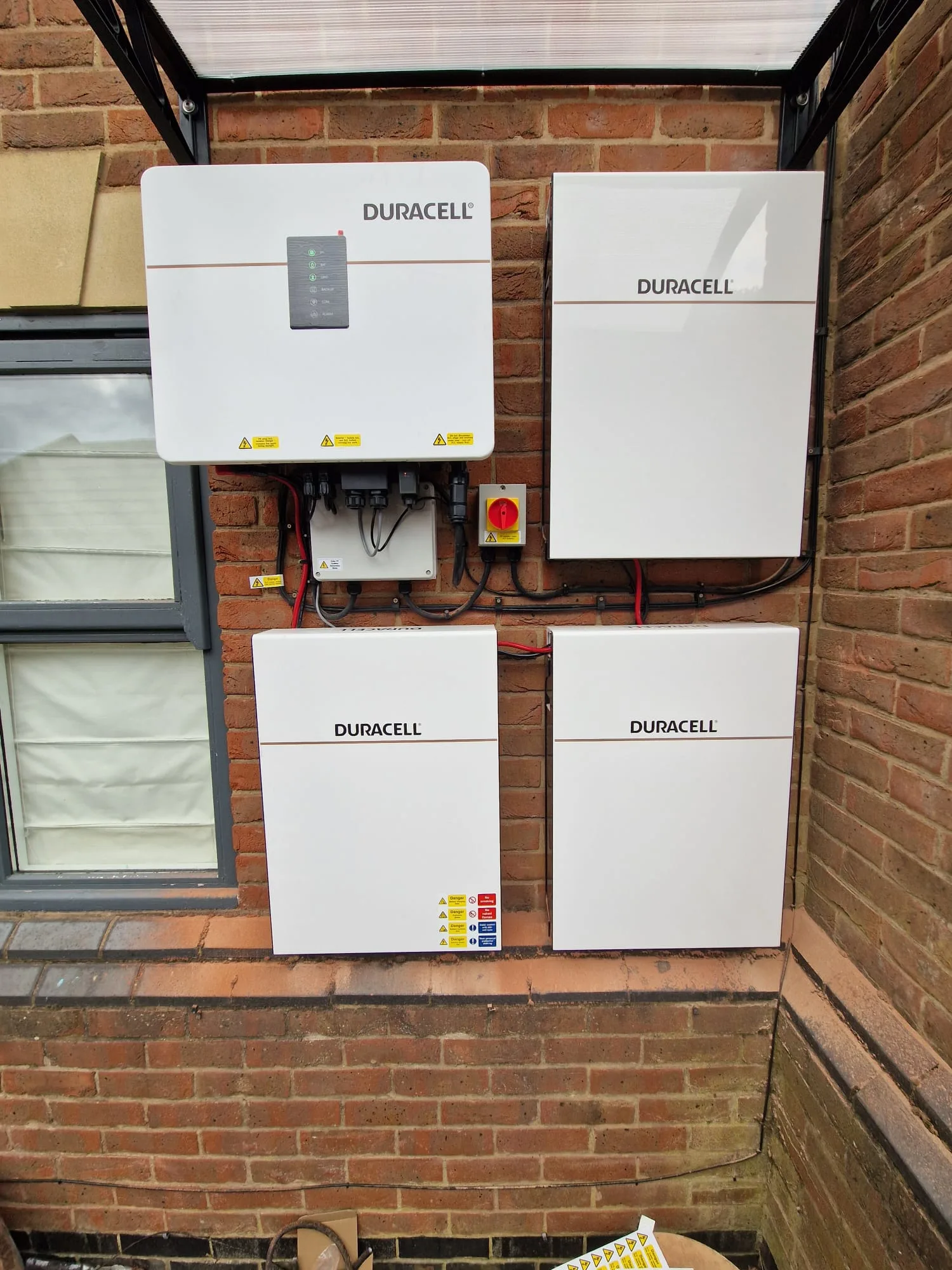
Home battery backup means something more specific than most people assume during a UK power cut: who it protects, and the realistic limits you should expect before you buy. This guide sets out what's included, what isn't, and the questions we ask when we design a system to keep a house running through an outage.
How battery backup works in practice
A battery on its own stores electricity but cannot automatically supply your house in a blackout unless the system has specific equipment to isolate the house from the public grid and switch supplies. That isolation stops the battery backfeeding the distribution network while engineers are working on it. Backup systems need a safe automatic transfer method or a dedicated backup output on the inverter so household circuits can run when the mains fail. Energy Saving Trust explains how battery systems store daytime solar for later use and how some systems include a dedicated backup function. (energysavingtrust.org.uk)
Partial backup versus whole-home backup
There are two common configurations. Partial backup powers a small, dedicated sub-board for essentials such as the fridge, a few sockets, lights and your router. Whole-home backup attempts to power the entire consumer unit and all circuits, which needs larger battery capacity, a compatible hybrid inverter, and a transfer device sized for the house load. Not every battery system or inverter supports whole-house islanding by default, so this is worth checking before you commit to a spec. (nhbc.co.uk)
What partial backup typically covers
Fridge and freezer
Selected lighting circuits
Router, phone chargers or a few sockets
Essential heating controls or small electric heaters (subject to capacity)
We work through which circuits you want protected and wire those to a small backup consumer unit, so the battery is used efficiently during outages.
What whole-home backup requires
Battery capacity sized to meet typical house demand for the desired hours
A hybrid inverter with certified backup or an automatic transfer switch
Appropriate consumer unit segregation and protection
Design checks for high-load appliances such as electric boilers, EV chargers and storage heaters
Whole-home setups are achievable, but they cost more and need careful design to avoid overloading the battery or inverter at switchover. Correctly engineered backup can keep essential systems running, though battery packs may need replacement cycles across a system lifetime. (energysavingtrust.org.uk)
Can solar keep charging the battery during a power cut?
Solar panels can continue to power the house during a cut only if the inverter and safety controls allow the array to feed the isolated home while the grid is disconnected. Not all inverters or installations permit this: some systems stop exporting or charging during a grid failure for safety reasons. This depends on manufacturer capability and the installed transfer technology, so we assess your inverter, battery and any gateway or transfer device at survey stage and specify whether daytime solar can top up the battery while the house runs off stored energy. (nhbc.co.uk)
Design choices we make for reliable backup
Designing backup for a property starts with two questions: how long you want to ride out an outage, and which loads are essential. From there we size the battery and choose either a dedicated backup output on the inverter or an automatic transfer switch, and check wiring, consumer unit segregation and how the chosen inverter handles PV during islanding. Where a design includes a generator or a larger system, we follow current guidance from Ofgem and gov.uk on safe backup and generator permitting. (ofgem.gov.uk)
For an integrated route to resilience, batteries can be combined with solar, smart inverters and EV charging as a single package. See our home battery storage page and our complete energy package for how components and finance options are bundled.
Practical limits and what you should expect
Expect a switchover delay of a fraction of a second to a few seconds, depending on the transfer device; the brief interruption usually won't harm most appliances. Batteries have finite capacity, so long outages will require load management or prioritisation, and some high-power devices will drastically shorten backup runtime. As MCS-certified installers, we design to recognised standards, but a domestic battery remains a household resilience measure rather than a substitute for network-level protections. (ofgem.gov.uk)
Next steps with us
If resilience is your main reason for a battery, we assess critical loads at survey and build a plan that balances battery size and cost. For customers who want to combine daily savings and power-cut protection, hybrid designs aim to optimise self-consumption alongside the chosen backup function. Learn more on our inverters and smart tech page, or get a free quote so we can propose a backup-capable design for your home, including realistic run-time estimates for your key loads.